Therapeutic Yoga · Arthritis · Joint Health
Yoga for Arthritis:
How to Move Without Pain — Knee, Hip & Spinal
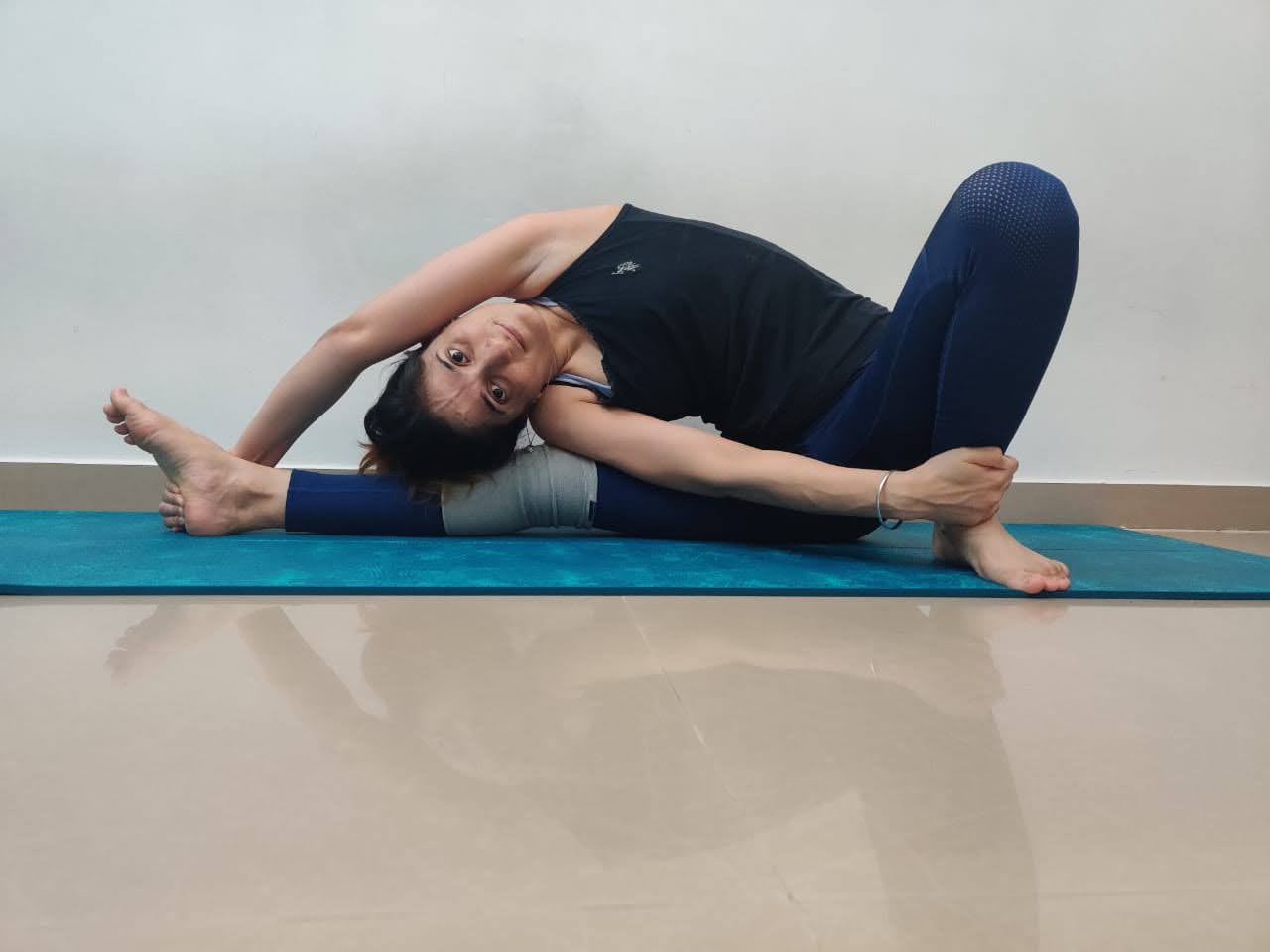
Arthritis is not a condition that gets better with rest. Every rheumatologist, every physiotherapist, and every yoga teacher who works with arthritic patients will tell you the same thing: movement is medicine. The problem is not movement itself — it is the wrong kind of movement. Yoga, done correctly with joint-specific modifications, is one of the most effective non-pharmacological interventions for arthritis pain and function. Here is what works.
Arthritis is inflammation of one or more joints. The two most common types in India are osteoarthritis (OA) — wear-and-tear degeneration of joint cartilage, especially in the knees and hips — and rheumatoid arthritis (RA) — an autoimmune condition causing systemic joint inflammation. The yoga approach differs somewhat for each.
The Fundamental Principle — Joint Loading vs Joint Compression
What Arthritic Joints Need
- Gentle, rhythmic movement: Cartilage has no blood supply — it is nourished by synovial fluid that is pumped into the joint only during movement. Regular, gentle movement keeps cartilage nourished.
- Muscle strengthening around the joint: Stronger muscles reduce the load placed directly on the joint surface. For knee OA, every 1kg of leg muscle gained reduces knee joint load by 3–4kg with each step.
- Reduced inflammation: Yoga's cortisol-lowering and parasympathetic effects reduce systemic inflammation — directly addressing RA and the inflammatory component of OA.
- Avoid: High-impact loading, forced ranges of motion, any movement that creates sharp pain.
⚠️ Golden Rule for Arthritis Yoga
The distinction between good pain and bad pain is critical. Good pain: mild ache or stiffness that eases during the session — this is appropriate challenge. Bad pain: sharp, stabbing, or joint pain that worsens during or after practice — stop immediately. If a pose creates bad pain, modify it or replace it. There is always a safer version.
Yoga for Knee Arthritis (Most Common in India)
The quadriceps are the primary shock absorbers of the knee joint. In knee OA, weak quads are both a cause and consequence of pain — weak quads mean the joint bears more load. Straight leg raises strengthen the quads without any compression on the knee joint, making them safe even for severe knee arthritis. This is the most important exercise for knee OA and should be done daily without exception.
- Lie on your back, left knee bent (foot flat), right leg straight.
- Flex your right foot (toes toward shin) — this activates the entire leg.
- Inhale. On the exhale, raise the right leg to 45° — hold 3 seconds.
- Lower slowly. That is one repetition. Do 15–20 reps, then switch legs.
- Progress to ankle weights (0.5–1kg) as strength builds.
Standard Warrior poses can compress arthritic knees. Using a chair for support allows all the muscle activation benefits of Warrior with dramatically reduced joint load. Place both hands on the back of a chair. Step one foot back into a gentle lunge. The front knee bends only as far as pain-free. This single modification makes Warrior accessible to virtually everyone with knee arthritis.
- Stand behind a sturdy chair, both hands on the back. Feet hip-width.
- Step the RIGHT foot back 2–3 feet. Keep the back heel lifted if more comfortable.
- Bend the LEFT knee — only as far as pain-free, even 10–15 degrees is sufficient.
- Hold 20–30 seconds. Feel the activation in the left glute and thigh.
- Return and switch sides. Repeat 3–5 rounds each side.
Yoga for Hip Arthritis
The hip joint is a ball-and-socket that requires movement in all planes to maintain cartilage health. Lying on your back and moving the hip through circles removes body weight from the equation, allowing the joint to move through its full (or near-full) range with zero compression. This is the single most effective mobility exercise for hip arthritis and takes under 5 minutes.
- Lie on your back. Hug your right knee to your chest.
- Make slow circles with the knee — the hip is doing the rotation. Keep circles small.
- 10 circles clockwise, 10 counter-clockwise. Feel the hip joint releasing.
- Extend the leg straight, then switch sides.
- Progress to larger circles and figure-eights as pain allows over weeks.
Yoga for Spinal Arthritis (Spondylosis)
Spinal arthritis (spondylosis) most commonly affects the facet joints — the small joints at the back of each vertebra. These joints, like all synovial joints, are nourished by movement. Seated Cat-Cow rhythmically opens and closes the facet joints, pumping synovial fluid into them and reducing stiffness. It can be done in an office chair, requiring no floor work. This is the first exercise I give every student with spondylosis.
- Sit at the edge of your chair, feet flat, hands on knees.
- Inhale: arch your lower back, roll shoulders back, lift the chin slightly (Cow).
- Exhale: round your spine, tuck chin to chest, draw navel in (Cat).
- Move slowly, feeling each segment of the spine participating.
- 10–15 repetitions. Add gentle side bends: 5 each direction.
Pranayama for Arthritis
Why Breathwork Matters for Arthritis
Chronic pain activates the HPA stress axis, raising cortisol and inflammatory cytokines — directly worsening arthritis. Nadi Shodhana (alternate nostril breathing) practiced for 10 minutes daily has been shown to reduce inflammatory markers (CRP, IL-6) in arthritis patients over 12 weeks. Bhramari further reduces pain perception through vagal activation. These are not optional additions — they are core components of arthritis yoga management.
Rheumatoid Arthritis: Special Considerations
RA is an autoimmune condition with flare periods. During active flares (hot, swollen joints), avoid any movement that loads the inflamed joint. Stick to pranayama, body scanning, gentle breath work and Shavasana during flares. When inflammation subsides, gentle range-of-motion exercises and gradually increasing strengthening is appropriate. Never begin a new yoga programme during an RA flare without medical guidance.
How Long Before Yoga Helps?
Stiffness typically reduces within 2–4 weeks of daily practice. Pain reduction takes 6–12 weeks. Functional improvements — ability to climb stairs, get up from the floor, walk distances — can take 3–6 months of consistent practice. The research consistently shows that people who maintain practice see continued improvement for at least 2 years. The practice compounds.
Want a Programme Built Around Your Needs?
Rishu designs personalised yoga programmes — online or in-person in Bangalore. DM her to start.
Message @yogawithrishi_⚕️ Medical disclaimer: For educational purposes only. Not a substitute for medical advice. Always consult your doctor before starting a new exercise programme.